Artificial intelligence, or AI, has become one of the most consequential technological influences on contemporary education, but its relationship with learning did not begin with Generative AI. Click to read more…
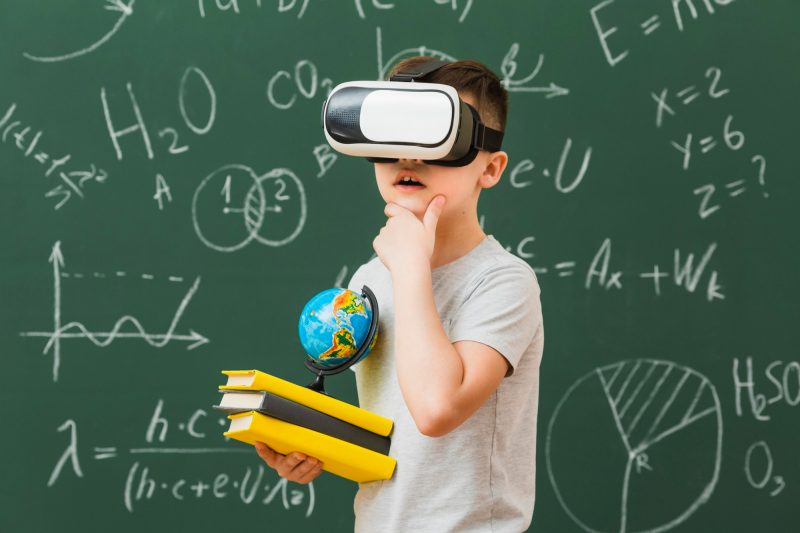

Artificial intelligence, or AI, has become one of the most consequential technological influences on contemporary education, but its relationship with learning did not begin with Generative AI. Click to read more…

Shrii Prabhat Ranjan Sarkar gave the title “Eternal Dance of Macrocosm” to a book that attempted to bridge the gap between Eastern and Western cosmologies. Articles for our special edition may explore Shrii Sarkar’s notion of cosmic devolution and evolution; the creation and evolution of life and mind; physical, psychic, and spiritual developments; and their theoretical and practical applications through various lenses of science and the humanities: in physics, chemistry, biology, economics, sociology, education, environmental science, philosophies of technology, new materialism, posthumanism, postcolonial studies, feminist futures, and related fields, to be published mid-2027. Click to read more…

Mass-consumption AI and its application in commercial, surveillance, and military operations are on the rise. Can morality and conscientious education guide overly analytical science to serve humanity? Click to read more…
The power to rewrite the genetic code of human life is no longer speculative. For the first time, science confirmed that human beings are born with deliberately altered DNA and can pass those genetic changes to future generations. Click to read more…

This essay engages with the debate over the hard problem of consciousness formulated by David Chalmers: why does sentience arise in matter? It interrogates Western physicalism via idealist arguments to challenge the philosophical incoherence of strict empiricism. After examining Chalmers’s analyses of the dominant scientific and philosophical arguments, the essay proposes that Prabhāt Ranjan Sarkar’s modern Tantric idealism develops an ontological response that incorporates physicalist emergentism without succumbing to metaphysical incoherence. Click to read more…

Bio-psychology may be divided into several classes – human psychology; the psychology of creatures which stand upon two legs, for example, orangutans; the psychology of other beings, including monkeys, quadrupeds and other developed animals; the psychology of reptiles which move through the pressure of the chest but cannot fly; the psychology of flying creatures, that is, birds; and then the psychology of multicellular protozoa, unicellular protozoa, multicellular metazoa and unicellular metazoa. Click to read more…

The basic concept of the spiritual knowledge propensity is that it “aims at the subjectivization of the internal objectivity.” Subjectivization in that sense means to takes one’s individual subjective “I-ness,” focus it, and merge it into the “ultimate subjectivity” of Universal Consciousness. This process has been directly associated with devotion. At its fullest, devotion has been described as “being merged in the constant thought of God”, and being “identical with love. …The moment devotion is aroused, love for God comes”. Click to read more…

Drawing on breakthroughs in fields including complexity science, quantum mechanics, and formal logic, this essay integrates the spiritual worldview of yoga and P.R. Sarkar’s Neohumanism to offer an understanding of nature as a dynamic, living system which will come to redefine our relationship to concepts of ‘truth’. Rather than a single universal truth, many truths exist and must be situated in their appropriate context. Click to read more…
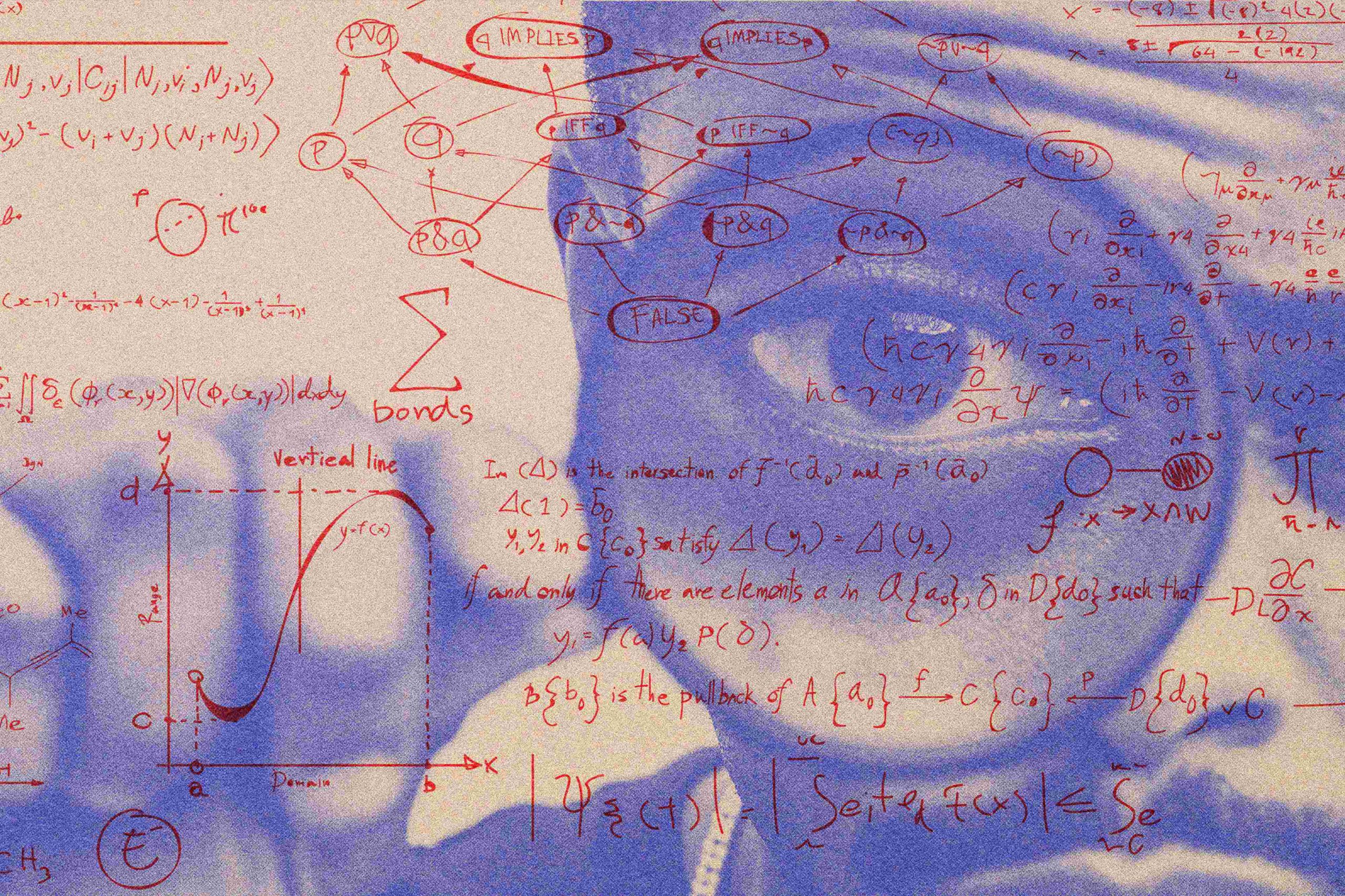
Overspecialization lessens the chances of seeing connections between different areas of physics. Finding connections is key to a deeper understanding. No single theory can unify physical forces, let alone unify biological and mental phenomena with physics. We should look for abstract generative constructs that may have more explanatory power. Click to read more…
The term “Universe” conveys an inherent unity—a single, indivisible whole. Yet energy alone cannot explain the harmony and beauty of creation; a guiding principle must imbue it with purpose and order. This essay reveals profound links between perception and the mechanisms of creation. Bridging quantum physics, cosmology, and philosophy, it draws upon diverse perspectives, including foundational ideas of Shrii P.R. Sarkar and key Western thinkers, to deepen our understanding of the Universe’s creative forces. Click to read more…